Finished a kitchen remodel. Or a bathroom. Or a whole-house flip. The contractor cleaned up, took the dumpster away, wiped down the counters, and the house looks better than it has in years.
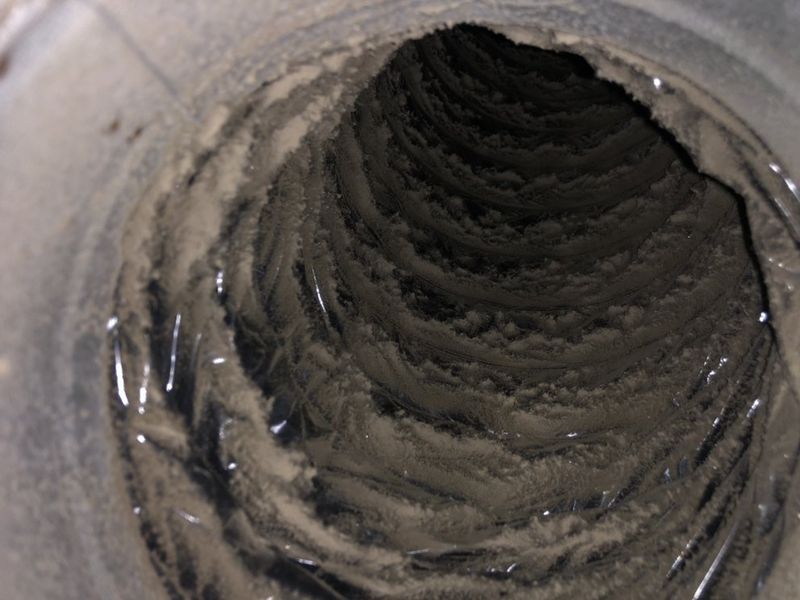
Your air ducts are full of drywall dust.
What happens during construction
Every renovation generates fine particulates. Drywall dust is the most common — it's gypsum, mostly, with very fine silica fibers. Sanding deposits wood residue, stain residue, and polyurethane particles. Tile work deposits cement and silica dust. Insulation installation deposits fiberglass or cellulose particles.
The HVAC system runs during construction. Contractors sometimes seal registers with plastic and tape; they often don't, or the seals fail partway through a multi-week job. Every time the HVAC kicks on during construction, the return side pulls airborne construction dust into the ductwork — and deposits it throughout the duct interior.
Why this matters more than regular dust
Construction dust is smaller and more biologically active than household dust. It's also more irritant. Silica dust in particular is a known respiratory irritant even at low exposures — it's why OSHA regulations require respirators for workers. A homeowner living in a house post-renovation is not wearing a respirator.
Drywall dust also binds easily to the duct interior and the evaporator coil. A kitchen remodel can deposit visibly more residue than three years of normal dust.
What a post-renovation duct clean addresses
We approach post-renovation differently than a standard duct clean:
- Heavier-duty filtration on the truck vacuum. Regular HEPA captures dander; construction dust requires post-HEPA carbon stage for silica.
- Extra attention to the return plenum. This is where construction dust piles up the deepest — return-side air velocity is lower than supply-side.
- Coil deep-clean, not just inspection. The evaporator coil collects a film of construction dust + condensate moisture that is the perfect substrate for future mold.
- Blower wheel sanitization. Construction dust builds up on blower wheel vanes and reduces airflow 5–15% until removed.
Timing
We strongly recommend scheduling the post-renovation clean immediately after the contractors finish — before you run the HVAC extensively in the newly-finished space. The longer you run the system with construction dust in the ducts, the deeper it sets in and the more of it migrates to the coil and blower.
Two-week rule: if the HVAC has been running for more than two weeks post-renovation, some of the construction dust is now deposited on components that take longer to clean. Don't wait.
Pricing
Post-renovation air duct cleaning is the same $399 flat (up to 10 vents). Add the coil cleaning + blower service ($199) — it's specifically the bundle that addresses the post-construction problem.
Book a post-renovation duct clean or call (408) 655-0609. Same-week service — we know how badly you want your house back.